
Teaching Multiple Ages with Read-Alouds: Tips That Actually Work
When you’re homeschooling kids at different ages and stages, things can get complicated fast. You’re trying to juggle phonics with one child, fractions with another, and help someone else understand what in the world a thesis statement is. It’s a lot.
But there’s one tool that works across nearly every grade level, builds connection, and doesn’t require a separate curriculum for each kid:
Read-alouds.

*Affiliate links may be present on this page. Please see the disclosure for details.
Now, before you picture a story circle with just little ones on a rug, let me pause you. Read-alouds aren’t just for preschool and picture books. They’re for everyone — from pre-readers to high schoolers, and even (especially) for us grown-ups.
Whether you’re curled up on the couch reading a fairy tale to a 5-year-old or working through Dickens with your teenager, shared stories can teach academic concepts, build vocabulary, spark deep conversations, and most importantly… they help your family grow together.
In this post, we’ll look at:
- Why read-alouds work so well in multi-age homeschools
- How to use them at each stage — from early learners to high school
- Real-life examples (yes, even teens love read-alouds!)
- Tips for making it work without stress or overplanning
Let’s dig in — because reading aloud might just be the simplest and most powerful teaching tool you didn’t know you already had.
Why Read-Alouds Work Across Ages
Whether your kids are five, fifteen, or somewhere in between, reading aloud is one of those rare homeschool tools that meets everyone right where they are. It bridges age gaps, invites connection, and helps every learner engage in a way that feels natural — not forced.
Here’s why read-alouds are especially powerful in a multi-age homeschool:
1. They Level the Playing Field
When everyone listens to the same book, no one has to feel “ahead” or “behind.” Your strong readers can dig into theme and tone while your younger ones follow the plot and soak up the language. Everyone gets something out of it — at their own level.
2. They Build Language, Vocabulary & Fluency
Even older kids benefit from hearing rich, complex language read aloud. It models fluency, introduces new vocabulary, and helps kids internalize sentence structure, tone, and style — without a grammar worksheet in sight.
3. They Invite Deep Discussion
A well-chosen book naturally sparks conversation. You don’t need a scripted guide — just a comfy couch and a good question:
“Why do you think he did that?”
“How would you have responded?”
“What would you change about the ending?”
Even reluctant readers often become eager participants in these kinds of discussions — especially when they’re built on shared experience.
4. They Build Connection (Not Just Comprehension)
Let’s be honest: homeschool days can get scattered. A read-aloud can be the anchor — a shared rhythm, a point of connection, and a memory in the making. Even if your kids don’t remember every detail of the plot, they’ll remember you reading it with them.
Read-alouds don’t just teach stories. They build trust, strengthen family culture, and remind our kids (and us) that learning can be relational — not just academic.
Read-Alouds with Littles (PreK–1st Grade)
This is the stage where read-alouds shine without much prompting. Little ones love being read to — they’re soaking up language, rhythm, and connection long before they can decode words themselves. And in a multi-age homeschool? Read-aloud time can help your youngest learners feel included, even if they don’t fully grasp every detail.
What It Looks Like:
- Short, simple stories (picture books, folk tales, or early chapter books)
- Interactive reading: pointing to pictures, asking questions, using silly voices
- Gentle repetition — yes, it’s okay if they want the same story for the fifth time this week!
How to Make It Work:
- Invite your little one to play quietly nearby during older read-alouds — blocks, coloring, or Play-Doh work great
- Let them act out the story as they listen (don’t stress over stillness!)
- Pause to explain tricky words or relate the story to something they know
- Include them in the conversation afterward — even if their responses are silly or simple
Examples:
- Make Way for Ducklings, Blueberries for Sal, or The Little House (for history or seasons)
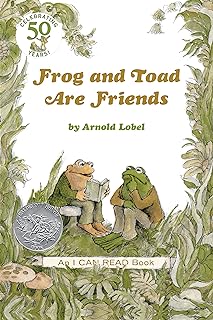
- The Frog and Toad series for character-building and early comprehension
- Fairy tales, fables, or folk stories from around the world — great for early geography and cultural exposure
Where the Wild Things Are: A Caldecott Medal Award Winner―A Beloved Classic of Childhood Wonder, Mischief, and the Heartfelt Return Home Guess How Much I Love You: (The Heartwarming Tale of Little Nutbrown Hare Loving Right Up to the Moon and Back – An Ideal Baby Shower Gift & Easter Basket Stuffer for Babies & Toddlers)Hello Lighthouse (Caldecott Medal Winner)Owl MoonMake Way for DucklingsExtra Yarn: A Caldecott Honor Award Winner – A Beautiful Picture Book About Everyday Magic for Kids (Ages 4-8)Blueberries for SalFrog and Toad Are Friends


Easy Extensions:
- Let them draw a picture of their favorite part
- Ask them to tell you what happened (you can write it down for them)
- Use puppets, play figures, or costumes to act out the story later
At this stage, the goal isn’t mastery — it’s exposure, imagination, and shared joy. If your little one giggles, wiggles, or asks a thousand questions mid-page, you’re doing it right.
Read-Alouds with Elementary Kids (2nd–5th Grade)
Elementary-aged kids are often right in the sweet spot for read-alouds. They’re old enough to follow more complex stories and begin making deeper connections — but they’re still young enough to be captivated by storytelling, imagination, and a little silliness along the way.
This is a great stage to introduce richer language, classic stories, and books that stretch their thinking just a little — while still inviting creativity and joy.
What It Looks Like:
- Longer chapter books or abridged classics
- Books tied to history, science, or geography
- Simple conversations after reading: “What do you think will happen next?”
“What would you do in that situation?”
How to Make It Work:
- Choose books that challenge vocabulary but still have an engaging plot
- Give them something to do with their hands — sketching, kinetic sand, quiet Lego building
- Use narration: have them retell what happened in their own words
- Add notebooking or copywork to extend the learning (if your day allows!)
Example: Peter Pan
When my son was seven, we read J.M. Barrie’s Peter Pan aloud. He loved it — not just the story, but the acting out of it. He’d leap off furniture, sword fight invisible pirates, and fully embody the world Barrie had built.
Fast forward ten years: late one night, that book came up in conversation. He paused and said, “You know, that story’s really about refusing to grow up… and how childhood ends whether you want it to or not.”
He hadn’t read it again in the ten years since our read-aloud — but it stuck. It worked its way deep into his heart and mind, and kept unfolding long after the story was finished.
Peter Pan (Illustrated): The 1911 Classic Edition with Original IllustrationsThe Complete Adventures of the Borrowers: 5-Book Paperback Box SetThe Boxcar Children Mysteries Boxed Set 1-4: The Boxcar Children; Surprise Island; The Yellow House; Mystery RanchThe Chronicles of Narnia 7-Book Box Set + Trivia Book Includes The Magician’s Nephew,The Lion the Witch and the Wardrobe, The Horse and His Boy,Prince Caspian, The Voyage of the Dawn Treader ,The Silver Chair, The Last Battle, +Trivia Book +BookmarkLittle House 5-Book Full-Color Box Set: Books 1 to 5Time Warp Trio Gift Set, Books 1-4 (Knights of the Kitchen Table; The Not-So-Jolly Rodger; The Good, the Bad, and the Goofy; Your Mother Was a Neanderthal)


Easy Extensions:
- Draw or illustrate scenes
- Copy favorite quotes or write a short journal entry “as” one of the characters
- Use a map to track locations if it’s a historical or adventure-based story
- Create a simple notebooking page with “Setting / Characters / Problem / Favorite Part”
This stage is all about building bridges — from listening to thinking, from enjoying to analyzing — while keeping the spark of imagination alive.
Read-Alouds with Middle Schoolers (6th–8th Grade)
Middle schoolers are in that wonderfully awkward stage — caught between childhood and the teen years. They’re developing stronger reasoning skills, bigger emotions, and a deeper curiosity about the world. And while they might act like they’ve outgrown read-alouds, the truth is? They still need (and secretly enjoy) them.
At this age, read-alouds shift from “storytime” to shared ideas. It’s about nuance, discussion, empathy, and perspective — all wrapped in a good book.
What It Looks Like:
- Novels with rich themes and discussion potential
- Historical fiction or books tied to science/geography topics
- Occasional poetry or short stories for variety
- A mix of listening and quiet hands-on activity (doodling, knitting, building, etc.)
How to Make It Work:
- Don’t force deep discussion — ask open-ended questions and see what they bite on
- Let them disagree with the characters (or you!) — and use that as conversation fuel
- Give space to process. Some middle schoolers don’t want to talk right away
- Provide optional reflection prompts: “Do you agree with what that character did?”
“What’s something you think the author wants us to notice?”
Book Suggestions:
- The Giver by Lois Lowry
- Where the Red Fern Grows
- The Witch of Blackbird Pond
- A Wrinkle in Time
- Short story collections (science fiction or historical)
Where the Red Fern GrowsSummer of the MonkeysThe Giver: A Newbery Award Winner―A Boy Discovers Dark Secrets in an Ideal World (Giver Quartet, 1)Island of the Blue DolphinsCheaper by the Dozen: A Timeless, Hilarious Memoir of Family Life with Twelve Kids and an Efficiency Expert Dad (Perennial Classics)My Side of the Mountain Trilogy (My Side of the Mountain / On the Far Side of the Mountain / Frightful’s Mountain)


Easy Extensions:
- Have them sketch a scene or quote that stood out
- Write a journal entry from a character’s perspective
- Create a simple one-pager: “Theme / Conflict / Favorite Quote / Connection to Me”
This is the age where read-alouds can help kids wrestle with ideas safely. They can encounter hard things in fiction, talk it out with you, and begin forming their own worldview — with you as a steady guide.
Read-Alouds with High Schoolers (9th–12th Grade)
Here’s the truth: most teens can read on their own. But that doesn’t mean read-alouds lose their value. In fact, reading aloud with your high schooler can spark some of the deepest and most memorable conversations you’ll ever have.
At this stage, it’s less about decoding text and more about engaging with big ideas — through literature, biography, poetry, or history. A shared read-aloud can be a launching pad for worldview discussions, literary analysis, and personal growth.
And yes — it can also be just plain fun.
What It Looks Like:
- Novels with literary depth, historical context, or moral complexity
- Memoirs or biographies
- Plays and poetry (read aloud dramatically!)
- Audiobooks as a shared experience — especially for longer or more dense texts
How to Make It Work:
- Choose books that pair well with history, literature, or government studies
- Set a cozy, respectful tone — tea and snacks go a long way
- Ask thoughtful, teen-respecting questions: “Do you think that still applies today?”
“Did that character make the right call?”
“What would you have done differently?” - Be willing to disagree — and let them challenge the text (or you)
Example: Great Expectations
When my son was a junior, he was assigned Great Expectations for a co-op literature class. It’s an incredible book — but also long and dense. Rather than having him slog through it alone, we decided to read it aloud together.
And you know what? He loved it.
He looked forward to our reading time. He laughed at Dickens’ humor, picked up on the irony, and talked about Pip like he was a real person. A few days before class, one of his best friends (also in the class) joined in our read-aloud — and was completely engaged. It became a shared experience, and more than a decade later, it’s still one of my son’s favorite books.
That’s the power of reading aloud — even for older kids.
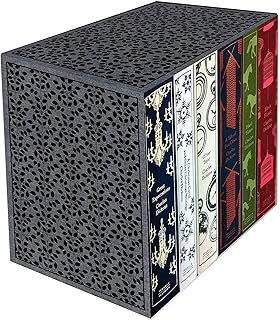
The Great Gatsby – Reader’s Library ClassicThe Adventures of Huckleberry Finn – The Original, Unabridged, and Uncensored 1885 Classic (Reader’s Library Classics)The Count of Monte Cristo (Penguin Classics)Pride and PrejudiceOf Mice and MenTo Kill a MockingbirdA Tale of Two Cities (Penguin Classics)Great Expectations (Penguin Classics)Major Works of Charles Dickens (Great Expectations / Hard Times / Oliver Twist / A Christmas Carol / Bleak House / A Tale of Two Cities)


Easy Extensions:
- Socratic discussion (you don’t need fancy guides — just ask good questions)
- Literary analysis notebooking: theme, symbolism, conflict, character growth
- Timed writing: 10-minute opinion pieces or reflections
- Book-to-film comparison or mini presentations
Teen years are full of independence, but your voice still matters. And when you share a powerful story with your high schooler — whether it’s fiction or biography — you’re doing more than just “covering literature.” You’re building connection, modeling thoughtfulness, and offering them space to grow as thinkers.
How to Make It Work in Real Life
If read-alouds sound amazing but also a bit… idealistic? You’re not alone. Homeschool moms often love the idea of reading aloud across ages, but when the toddler’s melting down, the teen’s got chemistry, and the dog’s barking at a squirrel — it can feel impossible.
Here’s the good news: read-alouds don’t have to be long, quiet, or daily to be impactful. They just need to be intentional and consistent enough to build rhythm and connection.
Here are some ways to make them work in your real-world homeschool:
1. Anchor Them to a Routine
Tie your read-aloud to something you already do:
- Breakfast or lunch
- Afternoon tea/snack time
- Wind-down time before bed or after dinner
It doesn’t have to be long — even 10–15 minutes makes a difference over time.
2. Use One Book for All Ages (with Flexibility)
Pick books that scale. Your younger kids may not catch everything, but they’re still learning. Your older kids can go deeper through conversation or notebooking afterward. One book, multiple experiences.
And if it doesn’t click? It’s okay to pivot. Not every book is the right fit for your crew.
3. Audiobooks Are Absolutely Read-Alouds
When your voice is tired or your hands are full, audiobooks are a gift. Listen together in the car, during chores, or while building puzzles. Press pause for conversation or just enjoy the story.
Bonus: You can “cast” different narrators to match genres or accents!
4. Don’t Require Stillness (Especially for Big Kids)
Let your kids draw, build, fidget, or pace. Many learners process better while moving. As long as they’re listening and able to respond if you check in, they’re engaged.
5. Use Read-Alouds as a Launchpad
Don’t feel pressure to build an entire unit study around every book. But if interest sparks? Let it lead you. A simple book about farming could lead to a nature study, a trip to the farmers market, or a food-themed history lesson.
You don’t have to plan it all — just follow curiosity when it shows up.
Read-alouds aren’t about perfect moments. They’re about showing up, sharing stories, and building a common experience — one chapter (or half-chapter) at a time.
Wrapping It Up: One Story, Many Hearts
Teaching multiple ages at home is no small task. There are days it feels like you’re spinning plates while juggling flaming curriculum guides. But when you pause, open a good book, and gather your kids — whether they’re five or fifteen — something shifts.
Read-alouds slow us down.
They draw us in.
They help us see each other again.
And while they’re packed with academic benefits — language development, critical thinking, literary analysis — their greatest strength might just be how they knit families together through shared stories.
You don’t have to do it perfectly.
You don’t need a Pinterest-worthy booklist or themed snacks (though you’re welcome to!).
You just need a book, a moment, and the willingness to press pause on the busy.
So go ahead — pick up that book. Invite your kids close.
Because whether they’re acting out Peter Pan or wrestling with Dickens, read-alouds remind us that learning doesn’t have to be separate to be meaningful.
It just needs to be shared.


